
Black Work Boots for Men

A Brief History of the Work Boot
Black work boots for men have roots in the industrial era of the 19th century. Factories, mines, and construction sites demanded footwear that could withstand long hours and physical punishment. Early versions were simple leather boots with thick leather soles. They offered basic protection and little else.
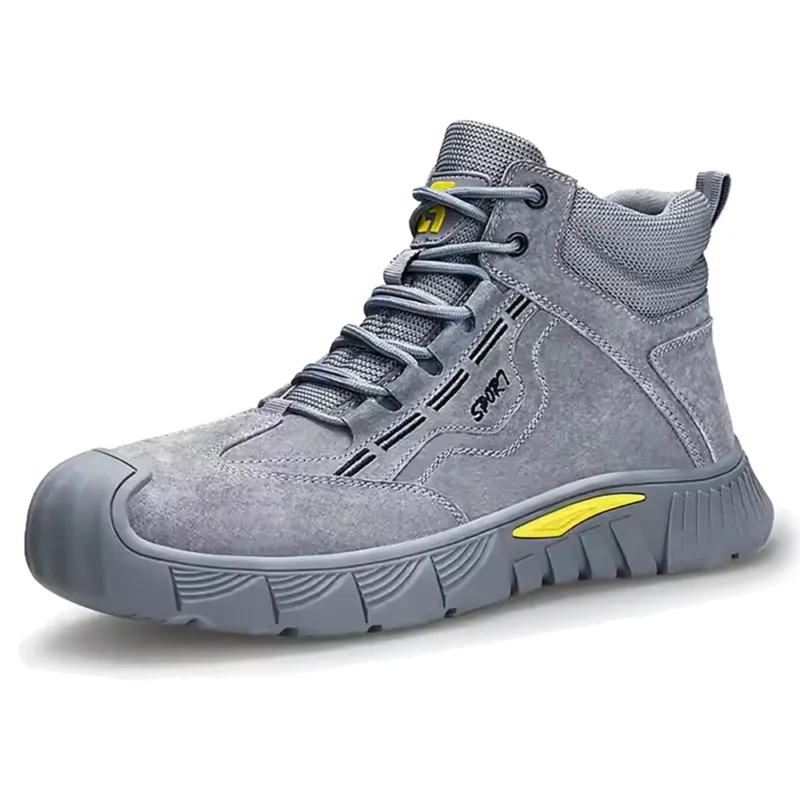
When your workday involves heavy machinery, falling objects, and unforgiving terrain, the Birks Defender Kevlar Steel Toe Safety Work Boots stand ready to protect you through it all. These boots deliver the exceptional durability, reliable protection, and all-day comfort you need to tackle any challenge and get the job done right, every single time.
By the early 20th century, steel toe caps became standard in heavy industries. The U.S. military influenced civilian boot design after World War II. Combat boots were adapted for civilian use, and the demand for durable, lace-up work footwear grew rapidly.
The 1970s and 1980s brought stronger regulations around workplace safety. Organizations like OSHA in the United States pushed manufacturers to standardize protective features. Brands began engineering boots to meet specific safety ratings. Black became the dominant color for professional and industrial settings because it hides grime, maintains a clean appearance, and suits a wide range of work environments.
Today, black work boots for men combine advanced materials science, ergonomic design, and certified safety standards. They serve construction workers, electricians, warehouse staff, law enforcement, military personnel, and tradespeople across every industry.
Key Technical Specifications to Understand
Buying black work boots means reading labels and understanding what each feature actually does. Here are the core specs that matter.
Safety Toe Types
- Steel toe: The original standard. Heavy but highly impact-resistant. Conducts temperature, so it gets cold in winter.
- Composite toe: Made from carbon fiber, Kevlar, or plastic. Lighter than steel, non-conductive, and metal-detector friendly.
- Alloy toe: Aluminum or titanium construction. Thinner than steel, lighter, and offers comparable protection.
- Soft toe: No cap at all. Used in low-risk environments where comfort is the priority.
Safety Ratings and Standards
| Standard | Region | What It Covers |
|---|---|---|
| ASTM F2413 | USA | Impact, compression, and optional electrical hazard, puncture, and metatarsal protection |
| CSA Grade 1 | Canada | Impact and compression resistance at 125J and 22.2 kN |
| EN ISO 20345 | Europe | Basic (SB) through full (S5) protection tiers including water resistance and anti-static |
| ANSI Z41 | USA (legacy) | Replaced by ASTM F2413 but still referenced by some employers |
Midsole and Outsole Materials
The midsole absorbs shock between your foot and the ground. Common materials include EVA foam (lightweight, good cushioning) and polyurethane (denser, longer-lasting). A puncture-resistant plate is embedded in the midsole of boots rated for nail hazards.
The outsole is the bottom contact layer. It must resist slipping, chemicals, oil, and heat depending on the work environment.
- Rubber outsoles offer the best overall grip and chemical resistance.
- Polyurethane outsoles are lighter and resist abrasion well.
- Nitrile rubber performs well in high-heat environments like welding or foundry work.
Upper Materials
- Full-grain leather: Durable, water-resistant when treated, and molds to the foot over time.
- Nubuck leather: Buffed grain surface. Softer feel but slightly less water-resistant than full-grain.
- Synthetic uppers: Lighter and often more breathable. Less durable over time.
- Waterproof membranes (e.g., Gore-Tex): Laminated inside the upper to block water while allowing vapor to escape.
Shank Construction
The shank is a plate inside the boot between the insole and outsole. It prevents the boot from bending in the middle. A full steel shank offers maximum rigidity for climbing and heavy lifting. A half shank allows some flex while still supporting the arch.
Benefits of Choosing Black Work Boots
Black is the most versatile color in work footwear. It suits industrial uniforms, business-casual environments, and everything in between. Beyond appearance, black work boots offer practical advantages.
Stain camouflage is a real benefit. Oil, grease, mud, and general dirt are far less visible on black leather than on tan or brown. This keeps boots looking professional longer between cleanings.
Heat retention in black leather absorbs ambient warmth, which matters in outdoor cold-weather work. This can reduce discomfort in winter job sites without requiring additional insulated liners.
Psychological authority is worth noting. Black boots project confidence and professionalism. This matters for law enforcement, security, supervisory roles, and any public-facing trade.
Resale and replacement value holds more consistently for black work boots. Neutral colors maintain broader market demand.
How to Compare Black Work Boots: A Buyer’s Checklist
Use this table to evaluate any pair of black work boots before purchasing.
| Feature | Entry-Level | Mid-Range | Premium |
|---|---|---|---|
| Toe protection | Steel | Composite or alloy | Composite with metatarsal guard |
| Upper material | Synthetic or split leather | Full-grain leather | Full-grain with waterproof membrane |
| Outsole | Basic rubber | Oil-resistant rubber | Chemical and heat-resistant nitrile |
| Shank | Half shank | Full steel shank | Full shank with torsion control |
| Insole | Removable foam | Cushioned arch support | Orthotic-grade EVA or polyurethane |
| Safety rating | ASTM F2413 basic | ASTM F2413 EH + PR | Multi-standard (ASTM + EN ISO) |
| Weight per boot | 20–28 oz | 16–22 oz | 14–20 oz (composite construction) |
| Warranty | 30–90 days | 6 months | 1 year or more |
Matching Boot Features to Your Job
Different work environments demand different configurations. Here is how to match a boot to your actual work conditions.
Construction and Heavy Industry
Choose a boot with a steel or composite toe, a full steel shank, a puncture-resistant midsole plate, and an oil-resistant rubber outsole. Look for ASTM F2413 ratings that include the “PR” (puncture resistant) and “EH” (electrical hazard) codes. A waterproof upper is valuable for outdoor sites exposed to rain or concrete work.
When your workday involves heavy machinery, falling objects, and unforgiving terrain, the Birks Defender Kevlar Steel Toe Safety Work Boots stand ready to protect you through it all. These boots deliver the exceptional durability, reliable protection, and all-day comfort you need to tackle any challenge and get the job done right, every single time.
Electrical and HVAC Work
Prioritize electrical hazard (EH) rated boots. These prevent current from grounding through the foot when secondary contact with a live circuit occurs. Avoid steel toe in environments with strong electromagnetic fields. Choose composite or alloy toe instead.
Warehouse and Logistics
Comfort over long shifts is the main priority. A lightweight composite toe and a well-cushioned insole reduce foot fatigue. An anti-fatigue midsole with EVA or gel layers helps on concrete floors. Slip-resistant outsoles matter on warehouse floors where spills are common.
Law Enforcement and Security
Black tactical work boots suit uniformed roles. Look for a side zipper for faster on/off, a low-profile composite toe, and a non-marking outsole. Many tactical boots omit a safety toe entirely and use a soft toe for maximum mobility. This is acceptable in low-impact environments.
Plumbing, Welding, and Trade Work
Welders need boots with a smooth leather upper (no exposed lacing hooks that catch sparks), a heat-resistant outsole, and a metatarsal guard if working with heavy pipe or equipment. Plumbers benefit from waterproof construction and chemical-resistant outsoles that handle drain chemicals and solvents.
Proper Maintenance to Extend Boot Life
Black work boots last significantly longer with consistent care. Follow these steps to protect your investment.
- Clean boots after every shift. Remove dirt and debris with a stiff brush or damp cloth. Do not let mud or concrete dry on the upper.
- Apply leather conditioner monthly. Conditioner prevents the leather from drying and cracking. Use a product formulated for full-grain leather. Avoid petroleum-based products that degrade stitching.
- Use black boot polish every 4–6 weeks. Polish restores color, seals minor scratches, and adds a water-resistant surface layer.
- Treat waterproof boots with a silicone or wax spray every 2–3 months. Waterproof membranes degrade over time; surface treatment adds a secondary barrier.
- Replace insoles every 6–12 months. The cushioning compresses with daily wear. New insoles restore arch support and shock absorption.
- Rotate between two pairs. Letting boots dry completely between wears prevents mold and breaks down odor-causing bacteria.
- Store boots upright with boot trees. Boot trees maintain the shape of the upper and prevent creasing that weakens the leather.
- Inspect stitching and outsoles monthly. Catch delamination or worn tread early. A boot with compromised outsole grip is a slip hazard regardless of how well the upper looks.
How to Get the Right Fit
A poorly fitting work boot causes blisters, arch pain, and long-term foot problems. Follow these guidelines for an accurate fit.
- Measure both feet in the afternoon. Feet swell throughout the day. An afternoon measurement reflects the size at peak use.
- Wear the socks you use at work. Thick work socks add volume. Size with those socks on.
- Allow a thumb’s width of space between your longest toe and the front of the boot. Toe impact during downhill walking needs this clearance.
- The heel should not slip. A small amount of break-in movement is acceptable, but consistent heel lift causes blisters and ankle instability.
- Wide-foot options matter. Many manufacturers offer EE or EEE widths in popular models. A wide toe box reduces pinching on the outside of the foot.
- Break in new boots gradually. Wear them for 2–4 hours per day for the first week. Increase wear time as the leather molds to your foot.
Steps to Select the Right Black Work Boot
Follow these steps in order to make a confident buying decision.
- Identify your workplace hazards. Review your job requirements or safety officer guidelines to determine which ASTM codes or standards apply.
- Choose your toe type. Steel for maximum protection, composite for electrical work or light travel, soft toe for low-risk environments.
- Select your upper material. Full-grain leather for durability, waterproof membrane for wet environments, synthetic for lightweight daily use.
- Evaluate the outsole. Match the outsole compound to your floor type: oil-resistant for shop floors, heat-resistant for welding, slip-resistant for wet surfaces.
- Confirm the fit using the guidelines above. Try boots on with your work socks and walk on a hard surface before purchasing.
- Set a maintenance schedule. Decide how often you will condition, polish, and inspect the boots to protect your investment from day one.
Black work boots for men represent a convergence of safety engineering, material science, and daily practicality. The right pair protects your feet, reduces fatigue, and serves reliably for years with proper care.
When your workday involves heavy machinery, falling objects, and unforgiving terrain, the Birks Defender Kevlar Steel Toe Safety Work Boots stand ready to protect you through it all. These boots deliver the exceptional durability, reliable protection, and all-day comfort you need to tackle any challenge and get the job done right, every single time.
