
Lightweight Composite Toe Boots

A Brief History of Protective Toe Caps
Steel toe boots have protected workers for over a century. The first steel-capped work boots appeared in industrial settings in the early 1900s. They solved a clear problem: heavy objects crush feet. Steel worked, but it came with trade-offs. Steel is dense. Steel conducts electricity. Steel conducts temperature. Workers in hot foundries, cold warehouses, and electrical environments faced real risks from the very protection they relied on.
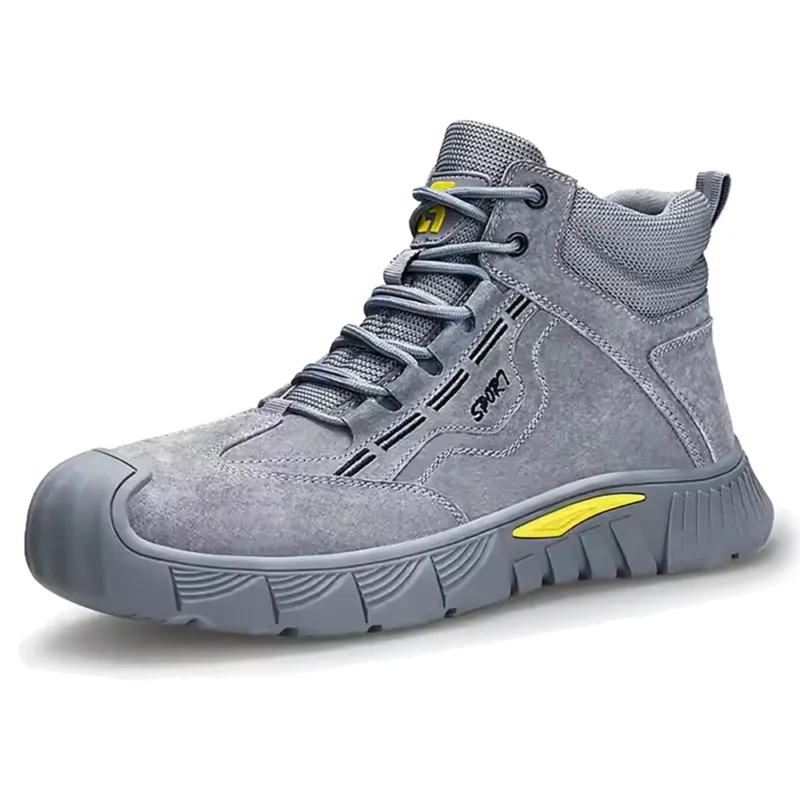
When your workday involves heavy machinery, falling objects, and unforgiving terrain, the Birks Defender Kevlar Steel Toe Safety Work Boots stand ready to protect you through it all. These boots deliver the exceptional durability, reliable protection, and all-day comfort you need to tackle any challenge and get the job done right, every single time.
The 1970s and 1980s brought aluminum alloy toe caps as a lighter alternative. Aluminum reduced weight by roughly 30% compared to steel. However, aluminum still conducts electricity and temperature. The real breakthrough came in the 1990s when manufacturers began engineering composite toe caps from non-metallic materials. By the early 2000s, composite toe technology had matured enough for mainstream adoption in industries from construction to aviation.
Today, lightweight composite toe boots represent the fastest-growing segment of the safety footwear market. Advances in materials science continue to push protective performance higher while keeping weight lower.
What Is a Composite Toe Boot?
A composite toe boot uses a protective cap made from non-metallic materials. Common materials include carbon fiber, Kevlar, fiberglass, and reinforced plastics such as thermoplastic polyurethane (TPU). These materials are layered or molded to meet the same impact and compression standards as steel, but at a fraction of the weight.
Composite toe caps must pass standardized safety tests. In the United States, ASTM F2413 sets the benchmark. A compliant composite toe cap must withstand 75 foot-pounds of impact force and 2,500 pounds of compression without collapsing to less than 16mm in height.
Technical Specifications: What to Look For
Safety Ratings and Standards
Not all composite toe boots meet the same standard. Check the label or product description for these certifications:
- ASTM F2413-18 — the current U.S. standard for protective footwear, covering impact (I/75) and compression (C/75) resistance
- CSA Z195 — the Canadian standard, required on many job sites in Canada
- EN ISO 20345 — the European standard, with SB (basic) through S5 (highest) classifications
- EH (Electrical Hazard) — indicates the boot resists electrical shock up to 18,000 volts in dry conditions
- SD (Static Dissipative) — indicates the boot safely dissipates static electricity buildup
Weight Comparison
Weight matters over a full workday. An extra pound on your feet equals roughly 1,000 extra pounds lifted per mile walked. Here is a typical comparison across toe cap types:
| Toe Cap Type | Avg. Boot Weight (pair) | Conducts Electricity | Conducts Temperature | Metal Detector Safe |
|---|---|---|---|---|
| Steel Toe | 3.8 – 4.5 lbs | Yes | Yes | No |
| Aluminum Alloy Toe | 3.2 – 3.8 lbs | Yes | Yes | No |
| Composite Toe | 2.4 – 3.2 lbs | No | No | Yes |
| Nano Composite Toe | 2.2 – 2.8 lbs | No | No | Yes |
Materials Breakdown
Carbon Fiber Composite: The lightest option. Carbon fiber offers an excellent strength-to-weight ratio. These boots weigh the least and provide strong impact resistance. Cost is higher due to manufacturing complexity.
Fiberglass Composite: A mid-range option. Fiberglass is durable, non-conductive, and more affordable than carbon fiber. It performs well in moderate-impact environments.
Kevlar Composite: Kevlar adds cut and puncture resistance alongside toe protection. Common in boots designed for environments with sharp debris.
TPU (Thermoplastic Polyurethane) Composite: The most common option. TPU is moldable, cost-effective, and meets ASTM standards reliably. Most mid-priced composite toe boots use TPU caps.
Benefits of Lightweight Composite Toe Boots
Reduced Fatigue
Workers who wear lighter boots report less foot, knee, and lower back fatigue. A difference of one pound per boot adds up across an eight-hour shift. Studies on occupational fatigue consistently link shoe weight with end-of-day energy levels and musculoskeletal strain.
No Metal Detector Interference
Airport security workers, government facility employees, and anyone who passes through metal detectors regularly benefit from composite toe boots. Steel and aluminum toe caps trigger metal detectors. Composite caps do not. This eliminates the need to remove boots at security checkpoints.
Temperature Insulation
Steel conducts both heat and cold directly to the toe area. In a cold storage facility at -20°F, steel toe caps can become dangerously cold. In a foundry or hot manufacturing environment, they can cause burns. Composite materials are thermal insulators. They do not transfer ambient temperature to the foot, providing a more stable internal environment.
Electrical Safety
Electricians, utility workers, and anyone working near live circuits benefit from non-conductive toe caps. EH-rated composite toe boots provide a critical layer of protection against accidental electrical contact.
Comfort Over Long Shifts
Composite toe caps typically offer more internal toe box volume than equivalent steel caps. They do not shrink or deform in cold temperatures. This translates to a better fit and fewer pressure points over a full shift.
When your workday involves heavy machinery, falling objects, and unforgiving terrain, the Birks Defender Kevlar Steel Toe Safety Work Boots stand ready to protect you through it all. These boots deliver the exceptional durability, reliable protection, and all-day comfort you need to tackle any challenge and get the job done right, every single time.
Who Should Wear Lightweight Composite Toe Boots
Composite toe boots suit a wide range of occupations. The following workers benefit the most:
- Electricians and electrical technicians who need non-conductive protection
- Airport and transit security staff who pass through metal detectors
- Cold storage and food processing workers who need thermal insulation
- Healthcare workers in environments with safety footwear requirements
- Construction workers seeking reduced fatigue over long shifts
- Warehouse and logistics workers covering high daily step counts
- Outdoor workers in environments with temperature extremes
Steel toe boots still outperform composite in one area: very high-energy impacts above the standard test threshold. In environments such as heavy forging, where objects exceeding several hundred pounds can fall, steel remains the preferred choice.
Maintenance and Care for Composite Toe Boots
Cleaning
Clean composite toe boots regularly. Remove loose dirt with a dry brush. Use a damp cloth with mild soap for the upper. Avoid harsh solvents or bleach. These chemicals can degrade bonding agents in the toe cap composite and weaken leather or synthetic uppers.
Inspecting the Toe Cap
Inspect the toe cap area after any significant impact. A cracked composite cap no longer provides rated protection. Unlike steel, which deforms visibly, composite materials can crack internally. If you notice any cracking, splitting, or separation at the toe box seam, replace the boot immediately.
Midsole and Outsole Care
Puncture-resistant midsoles degrade over time. Most manufacturers recommend replacing work boots every 12 months for heavy daily use, or sooner if the outsole shows significant wear. A worn outsole reduces slip resistance, which is independent of toe protection.
Drying
Never dry composite toe boots with direct heat such as a radiator, boot dryer set to high, or open flame. High heat can warp composite materials and delaminate adhesive bonds. Remove insoles and allow boots to dry at room temperature, or use a low-heat boot dryer.
Storage
Store boots in a cool, dry location away from direct sunlight. UV exposure degrades rubber outsoles and can dry out leather uppers. Use boot trees or stuff the toe area lightly to maintain shape during extended storage.
How to Select the Right Pair: A Step-by-Step Summary
- Identify your required safety standard. Check your employer’s requirements for ASTM, CSA, or EN ISO certification before you shop.
- Assess your electrical risk. If you work near live circuits, choose a boot with an EH (Electrical Hazard) rating.
- Consider your environment temperature. For cold storage or foundry work, confirm the boot has thermal insulation rated for your conditions.
- Choose the right composite material. Budget-conscious buyers should look at TPU composite caps. Workers in high-impact, lightweight-critical roles should consider carbon fiber composite.
- Verify the fit with your work socks. Try boots on with the socks you wear on the job. The toe box should have a thumb’s width of space at the end.
- Check outsole slip resistance. Look for an outsole rated for your specific surface type. Oil resistance (OR) and slip resistance (SR) ratings appear on the boot label.
- Review puncture resistance if needed. Environments with nails, sharp metal, or glass on the floor require a boot with a PR (puncture-resistant) midsole rating.
- Budget for quality. Entry-level composite toe boots start around $80 to $100. Quality mid-range options fall between $120 and $180. Premium boots with carbon fiber caps and full waterproofing run $180 to $250 and above.
Final Thoughts
Lightweight composite toe boots solve real problems. They protect feet from impact and compression while eliminating the thermal, electrical, and weight drawbacks of metal toe caps. Workers in electrical, cold-climate, high-security, and high-step-count environments benefit the most from making the switch.
The key is matching the boot to your specific environment and job requirements. Verify certifications, choose the right composite material for your use case, and replace boots as soon as the protective components show damage. A well-chosen pair of composite toe boots will improve comfort and safety across every shift.
When your workday involves heavy machinery, falling objects, and unforgiving terrain, the Birks Defender Kevlar Steel Toe Safety Work Boots stand ready to protect you through it all. These boots deliver the exceptional durability, reliable protection, and all-day comfort you need to tackle any challenge and get the job done right, every single time.
