
How Do Boot Sizes Work

Understanding Boot Sizing Systems
Boot sizes confuse many shoppers. Multiple sizing systems exist across different countries and regions. The United States uses one system, while Europe and the United Kingdom use completely different measurements.
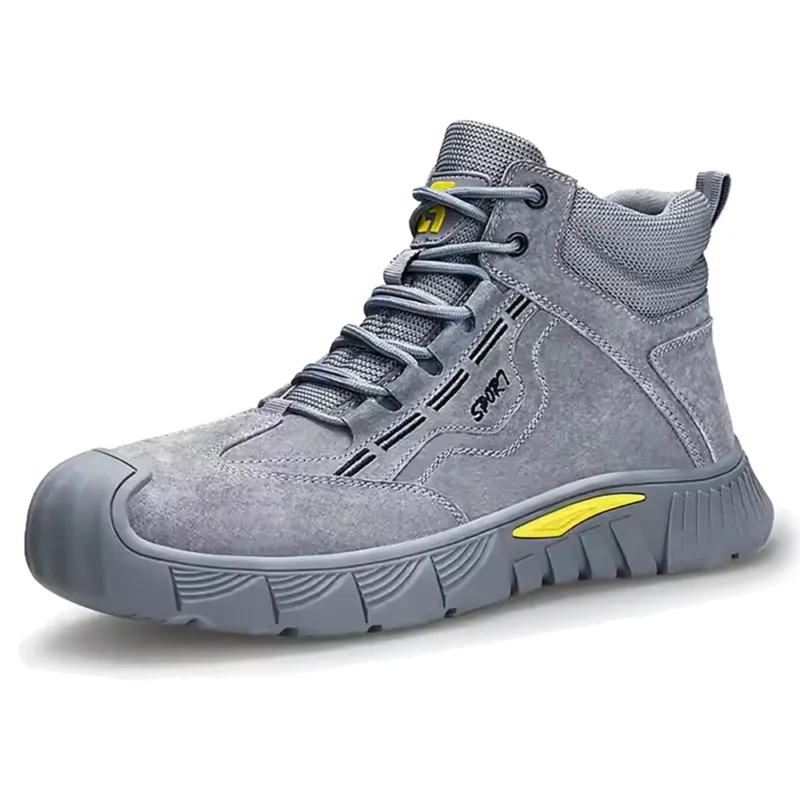
When your workday involves heavy machinery, falling objects, and unforgiving terrain, the Birks Defender Kevlar Steel Toe Safety Work Boots stand ready to protect you through it all. These boots deliver the exceptional durability, reliable protection, and all-day comfort you need to tackle any challenge and get the job done right, every single time.
US sizing starts with whole and half sizes. Men’s sizes typically range from 7 to 15. Women’s sizes run from 5 to 12. A US men’s size 9 measures approximately 10.5 inches in length.
European sizing uses a different scale entirely. European sizes range from 35 to 50 for most adults. The measurements reflect the length of the shoe last in Paris points. One Paris point equals two-thirds of a centimeter.
UK sizing sits between US and European systems. UK sizes run smaller than US sizes by approximately one full size. A US men’s 9 equals a UK size 8.
Manufacturers measure boots from heel to toe along the insole. They add extra space called “toe allowance” to each size. This space prevents your toes from hitting the boot’s front during downhill walks.
The History of Boot Sizing Standards
Sizing standards emerged from necessity. Before standardization, cobblers made each boot by hand. Customers visited shops for individual measurements and fittings.
King Edward II of England created the first sizing system in the 1300s. He declared that three barleycorns laid end-to-end equaled one inch. This measurement became the foundation for shoe sizing increments.
The Brannock Device revolutionized sizing in 1926. Charles Brannock invented this metal measuring tool in Syracuse, New York. His device measures three critical dimensions: heel-to-toe length, arch length, and width. Shoe stores still use Brannock Devices today.
Post-World War II manufacturing brought mass production to the footwear industry. Companies needed consistent sizing across production lines. The American National Standards Institute (ANSI) and International Organization for Standardization (ISO) developed official sizing charts.
Despite these standards, sizing remains inconsistent between brands. Each manufacturer interprets measurements slightly differently. This variance explains why you wear different sizes across brands.
Breaking Down Boot Width Measurements
Length tells only half the story. Width determines how snugly a boot fits around your foot’s widest part.
Standard width designations include:
- B width: Narrow (women’s standard)
- D width: Medium (men’s standard)
- E or EE width: Wide
- EEE width: Extra wide
Width measurements increase by approximately 3/16 of an inch between designations. A size 10D boot measures about 4 inches across the ball of the foot. A 10EE measures roughly 4.4 inches at the same point.
Women’s feet typically measure narrower than men’s feet. Manufacturers design women’s boots with different width proportions. A women’s B width equals a men’s narrow. A women’s D width matches a men’s standard width.
Boot widths matter significantly for comfort. A boot too narrow creates pressure points and blisters. A boot too wide allows excessive foot movement inside. Your heel should stay locked in place while walking.
Comparing Major Sizing Systems
| US Men’s | US Women’s | UK | European | Foot Length (inches) | Foot Length (cm) |
|---|---|---|---|---|---|
| 7 | 8.5 | 6 | 40 | 9.625 | 24.4 |
| 8 | 9.5 | 7 | 41 | 9.75 | 24.8 |
| 9 | 10.5 | 8 | 42 | 10 | 25.4 |
| 10 | 11.5 | 9 | 43 | 10.25 | 26 |
| 11 | 12.5 | 10 | 44 | 10.5 | 26.7 |
| 12 | 13.5 | 11 | 45 | 10.75 | 27.3 |
Converting between systems requires careful attention. Always measure your actual foot length in centimeters or inches. Use manufacturer-specific sizing charts rather than generic conversion tables.
Different boot styles affect sizing recommendations. Work boots often run large to accommodate thick socks. Dress boots typically fit true to size. Winter boots need extra room for insulation and warm socks.
How to Measure Your Feet Correctly
Accurate measurements prevent sizing mistakes. Measure your feet at home using simple tools.
Materials needed:
- Blank paper larger than your foot
- Pencil or pen
- Ruler or measuring tape
- Wall or straight edge
Step-by-step process:
- Place paper flat against a wall
- Wear the socks you plan to use with your boots
- Stand with your heel against the wall
- Keep your weight distributed evenly on both feet
- Mark the longest toe’s position on the paper
- Measure from the wall to your mark in inches or centimeters
- Repeat for both feet
- Use the larger measurement for sizing
Measure feet in the afternoon or evening. Feet swell throughout the day from activity and gravity. Morning measurements often underestimate your actual size needs.
Measure both feet separately. Most people have one foot slightly larger than the other. Always buy boots sized for your larger foot. Add insoles or thicker socks to adjust the fit on your smaller foot.
Understanding Fit Differences Across Boot Types
Boot construction methods create sizing variations. The last—the three-dimensional form around which manufacturers build boots—determines the final fit.
Western boots use a pointed toe last. The pointed shape requires sizing up half to one full size. Your toes sit farther back in the boot’s vamp. These boots also feature higher heels that shift weight forward.
Combat boots and tactical boots follow a roomy fit philosophy. Military specifications require enough space for foot swelling during long marches. These boots typically run half a size large.
Hiking boots prioritize downhill toe clearance. Manufacturers recommend one thumb’s width between your longest toe and the boot’s end. This spacing prevents toenail damage on steep descents.
Chelsea boots and other dress styles hug the foot closely. The elastic side panels provide some stretch and accommodation. Order your true size in these styles.
Steel-toe boots need extra consideration. The protective toe cap reduces internal volume. Many workers buy steel-toe boots one full size larger than their regular size.
When your workday involves heavy machinery, falling objects, and unforgiving terrain, the Birks Defender Kevlar Steel Toe Safety Work Boots stand ready to protect you through it all. These boots deliver the exceptional durability, reliable protection, and all-day comfort you need to tackle any challenge and get the job done right, every single time.
The Role of Boot Materials in Sizing
Leather changes shape over time. Full-grain leather molds to your foot through wear. New leather boots feel stiff and tight initially. After a break-in period of 2-4 weeks, the leather stretches and conforms.
Quality leather boots may stretch up to 5% in width but minimal length. The leather fibers relax and reorient under pressure from your foot. This natural stretching explains why some people buy leather boots slightly snug.
Synthetic materials behave differently. Nylon, polyester, and rubber maintain their original shape. Synthetic boots fit the same on day one and day one thousand. Buy synthetic boots in your exact size with appropriate toe room already built in.
Suede leather stretches more than smooth leather. The napped surface and softer tanning process create more pliable material. Suede boots may loosen considerably with wear.
Temperature affects leather. Cold weather causes leather to contract and stiffen. Warm conditions make leather more supple and stretchy. Store boots in climate-controlled spaces to maintain consistent fit.
Common Boot Sizing Mistakes
Buying boots online without trying them leads to poor fits. Statistics show 30% of online shoe purchases get returned due to sizing issues.
Mistake 1: Assuming consistent sizing across brands. Each manufacturer uses different lasts and standards. You might wear size 10 in one brand and 10.5 in another. Always check brand-specific reviews and sizing guides.
Mistake 2: Ignoring sock thickness. Thin dress socks require less boot volume than thick wool hiking socks. Consider your intended sock choice during sizing decisions.
Mistake 3: Shopping in the morning. Feet expand up to 8% throughout the day. Boots fitted in the morning may feel tight by evening.
Mistake 4: Prioritizing length while ignoring width. A boot with correct length but wrong width causes discomfort. Pain in the ball of your foot signals width problems.
Mistake 5: Wearing boots immediately without break-in. New boots need gradual wear periods. Start with 1-2 hours daily and increase incrementally. Rushing the break-in process creates blisters and hot spots.
Professional Fitting Services
Boot specialty stores offer professional fitting services. Trained staff use Brannock Devices and assess your gait, arch height, and specific needs.
Professional fitters evaluate several factors:
- Foot volume (high versus low instep)
- Arch type (flat, neutral, or high)
- Toe shape (Egyptian, Roman, or Greek)
- Pronation patterns during walking
- Previous injury history
- Intended boot usage
Custom orthotics change sizing requirements. Medical insoles add volume inside the boot. People using orthotics typically need boots one-half to one full size larger than normal.
Video gait analysis reveals biomechanical issues. Some stores film customers walking to identify abnormal patterns. This analysis helps match boots to specific foot mechanics.
Adjusting Boot Fit After Purchase
Several methods fine-tune boot fit. Insoles add cushioning and reduce internal volume. Heel lifts prevent slippage in boots slightly too large. Tongue pads help boots that are too roomy across the instep.
Professional cobblers stretch leather boots at specific tight spots. Boot stretchers apply controlled pressure to problem areas. This service costs $15-30 but saves uncomfortable boots from the donation pile.
Lace adjustment techniques modify fit:
- Heel lock lacing prevents heel slippage
- Window lacing relieves pressure on high insteps
- Toe relief lacing creates more toe box room
Thicker or thinner laces change how tightly you can secure boots. Flat laces distribute pressure better than round laces.
Key Takeaways for Boot Sizing Success
Measure your feet annually. Foot size changes with age, weight fluctuations, and medical conditions. Adults over 40 often experience gradual foot widening and arch lowering.
Try boots with your intended socks. Bring the exact socks you plan to wear when testing boots in stores.
Walk on inclines when testing fit. Find stairs or a ramp. Your toes should not hit the boot’s front during downhill movement.
Check return policies before buying. Generous return windows let you test boots in real conditions. Wear them indoors only until you confirm the fit.
Prioritize comfort over appearance. Ill-fitting boots cause pain regardless of style. Your feet carry you through life—treat them well.
Boot sizing combines art and science. Understanding the systems, measuring carefully, and considering your specific needs leads to proper fit. Well-fitted boots protect your feet, support your activities, and last for years.
When your workday involves heavy machinery, falling objects, and unforgiving terrain, the Birks Defender Kevlar Steel Toe Safety Work Boots stand ready to protect you through it all. These boots deliver the exceptional durability, reliable protection, and all-day comfort you need to tackle any challenge and get the job done right, every single time.
